
May 7, 1915: U-boat sinks the Lusitania
With World War I now a century removed, we’ll be seeing a lot of big anniversaries over the next few years (in fact, we already have here on TDIH).
Today is another: on this day in 1915, U-20, a German Unterseeboot, sank the British passenger liner RMS Lusitania, killing 1,198 passengers.
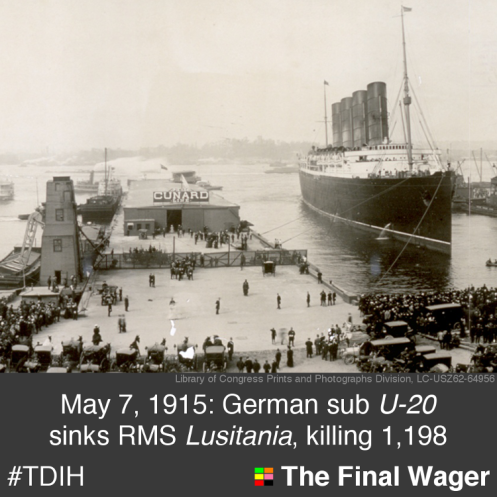
History.com has a full rundown of the events and how they influenced the U.S. to join the war, but here are some of the main facts about the sinking of the Lusitania:
– She was sailing from New York City to Liverpool
– She was struck 10 miles from Old Head of Kinsale, Ireland
– She sank in 18 minutes
– 1,198 died; 761 survived
Reaction in the United States was divided. Many considered it an act of evil, a pointless strike against nearly 2,000 innocent lives; others pointed to the warning the German embassy had published in dozens of newspapers, reminding potential passengers of the state of war around the British Isles.
Officially, the ship was carrying small-arms munitions, but whether higher-grade weapons were aboard is still a matter of debate. The commander of U-20, Walther Schwieger, must have felt the warning was sufficient to justify the sinking of what claimed to be nothing more than a passenger liner. (Schwieger would die later in the war when another U-boat of his, U-88, hit a British mine.)
In 1918, animation pioneer Winsor McCay created a film called The Sinking of the Lusitania, possibly the first cartoon movie used for propaganda. (Slightly higher quality version here.)