
Two-player math: break points
In this video, I discuss some of the math behind two-player wagering situations — particularly, a concept called break points.
In Part One of my wagering tutorial, I walked you through my basic steps for calculating wagers. In Part Two, I discussed situations in which it makes sense for two players to wager for a tie.
Now, we’re going to tie those two concepts together.
The ratios 1/2, 2/3, and 3/4 are also known as “break points”. There are an infinite number of break points; in each case, the numerator (the number on top) is one less than the denominator (the number on the bottom).
Or, if you prefer algebra, they take the form k / (k + 1).
At or above each break point, a new wagering possibility opens up for the trailer. In other words, the closer the trailer is to the leader, the more ways he has to win.
Here, we’ll look at the first five break points — all the way up to when the trailer has 5/6 of the leader’s score.
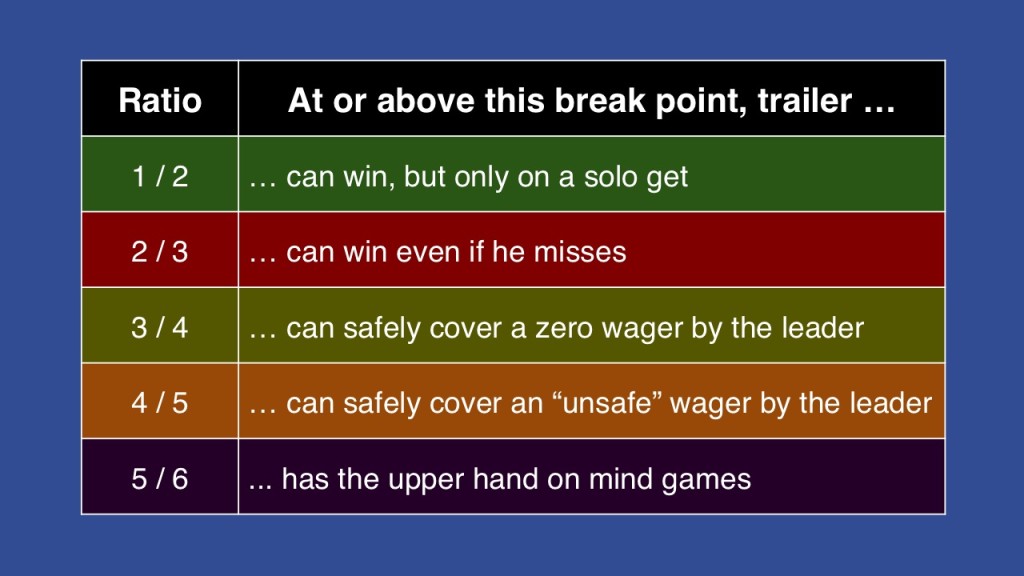
Let’s walk through them. In each example, the leader will have 12,000, because 12,000 is easily divisible by the numbers 2 through 6. Remember that whenever the ratio falls directly on a break point, it’s a wager-to-tie situation.
Break point: one half
The one-half break point is the first time the trailer can actually catch the leader.
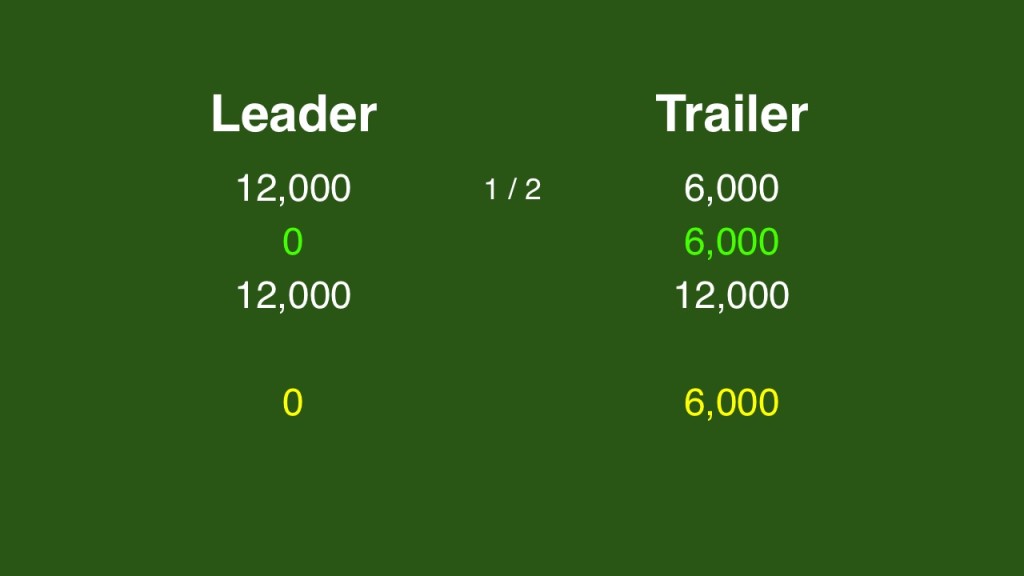
If the trailer has 6,000 and the leader has 12,000, the trailer will need to double up.
This situation is known as a crush, because the only way the trailer can win (assuming no ties) is if he is right and the leader is wrong.
Break point: two thirds
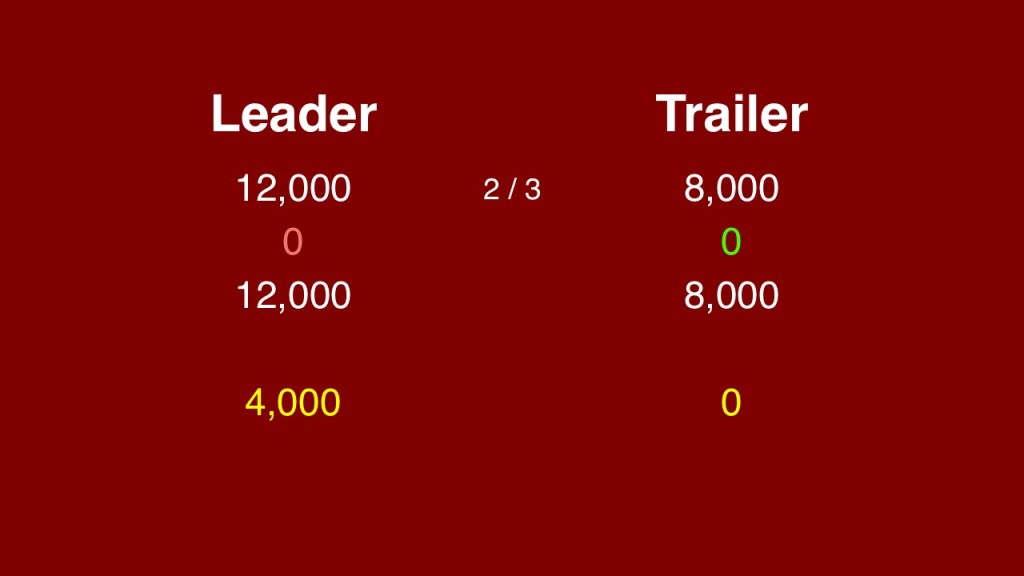
At the two-thirds break point, the trailer can win with a zero wager — assuming the leader wagers for the lock-out.
Here, the trailer has 8,000. If the trailer wagers everything, the leader will need to wager 4,000 to cover.
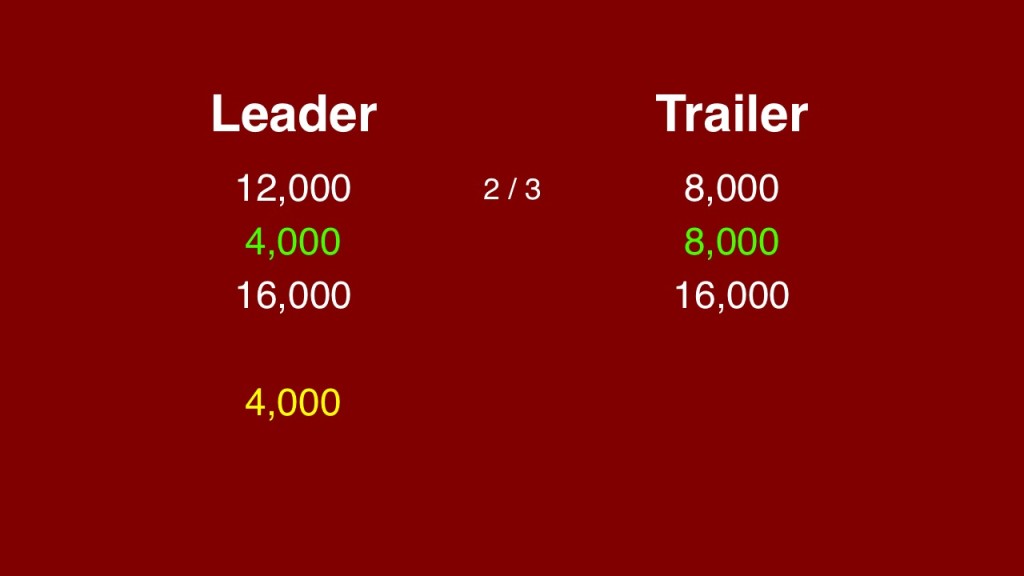
But an incorrect response will leave the leader with 8,000 — the trailer’s score.
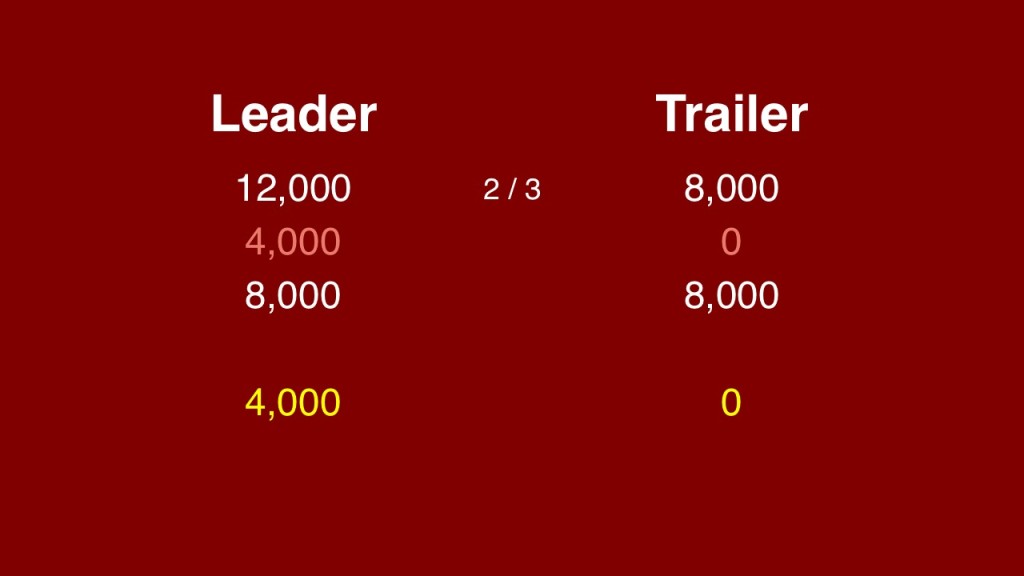
Two-thirds is also the first time mind games come into play. If the trailer wagers “small”, the leader can guarantee a victory by also wagering “small”.
Break point: three quarters
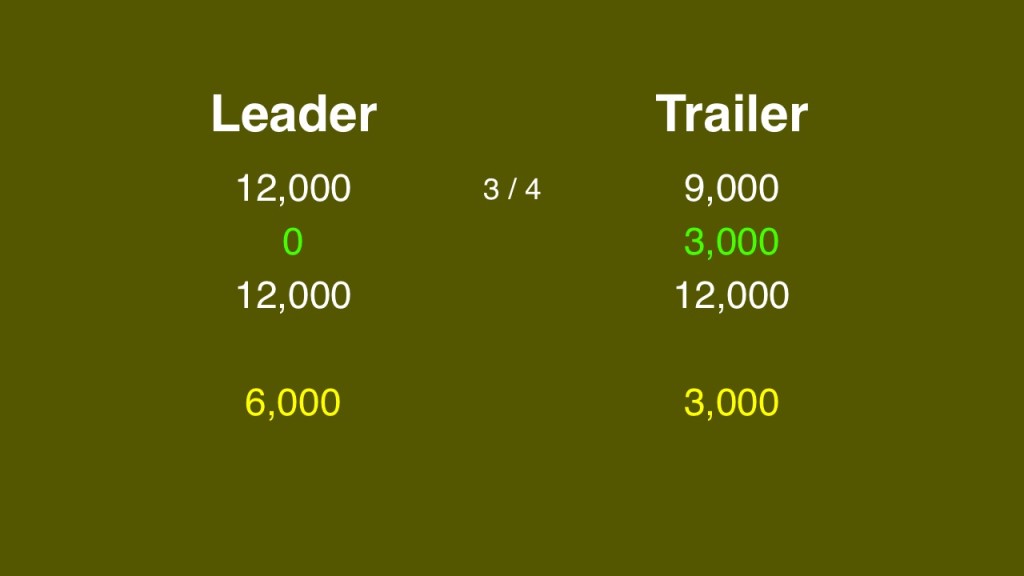
At three-quarters, the trailer can safely cover a zero wager by the leader.
If the trailer doubles up, he’ll have 18,000, so the leader will need to wager 6,000.
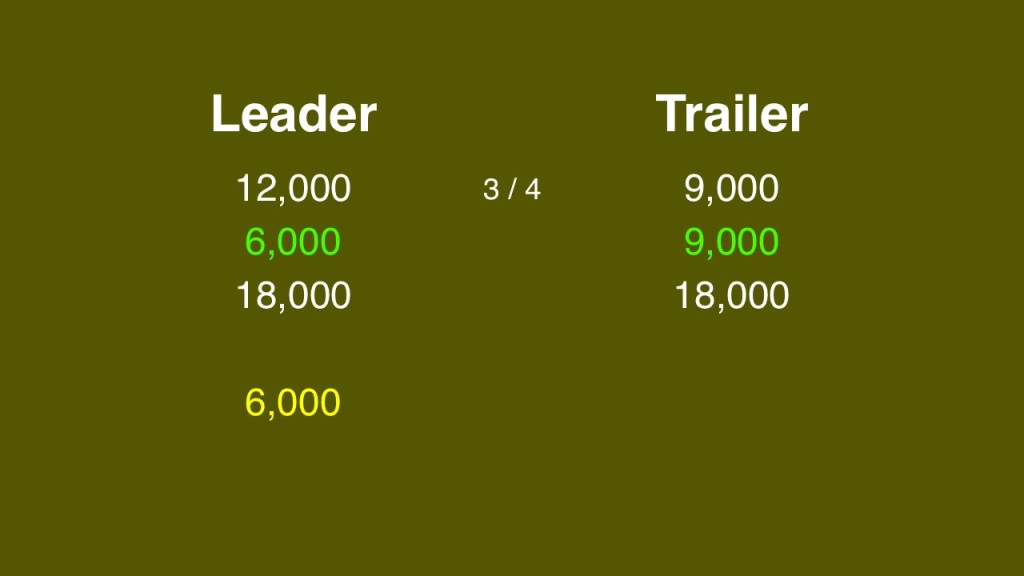
If he’s wrong, he’ll be left with 6,000, which means the trailer can wager up to 3,000.
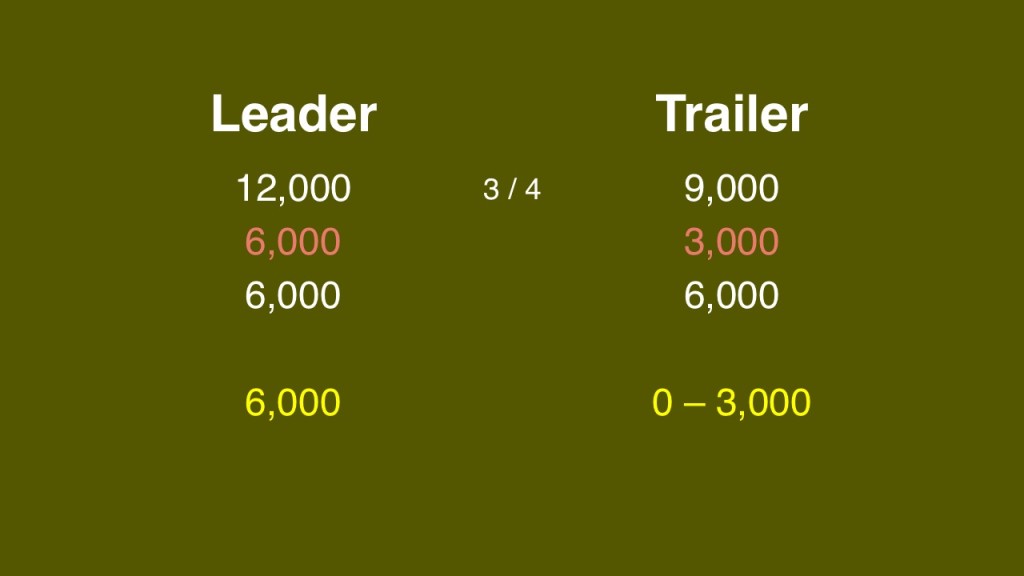
But notice that the difference between their scores is also 3,000, so the trailer can make that wager.
Break point: four fifths
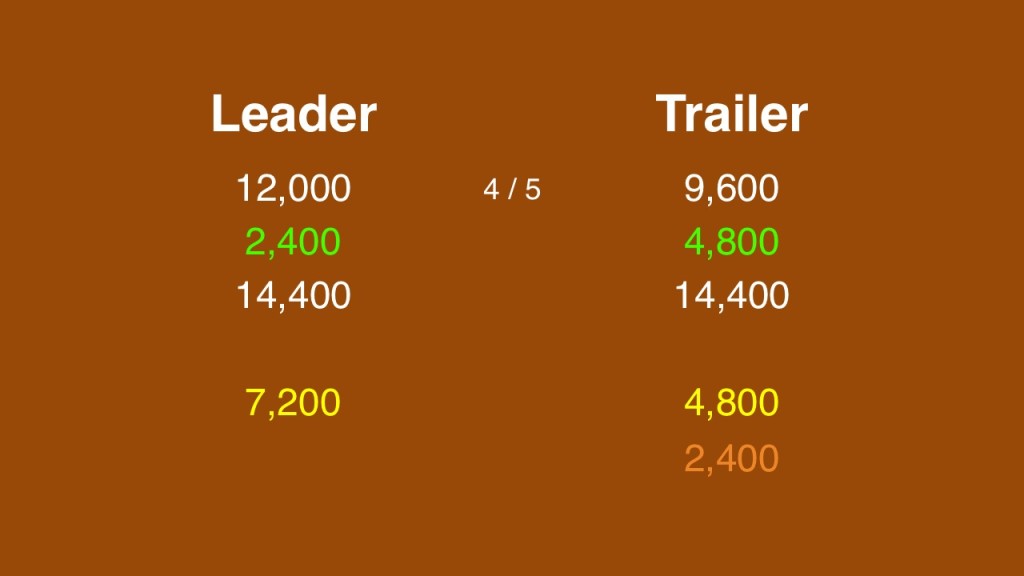
At the 4/5 break point, the trailer can cover what I call an “unsafe” wager by the leader.
The trailer has 9,600. If the leader wants to cover him, that will require a wager of 7,200.
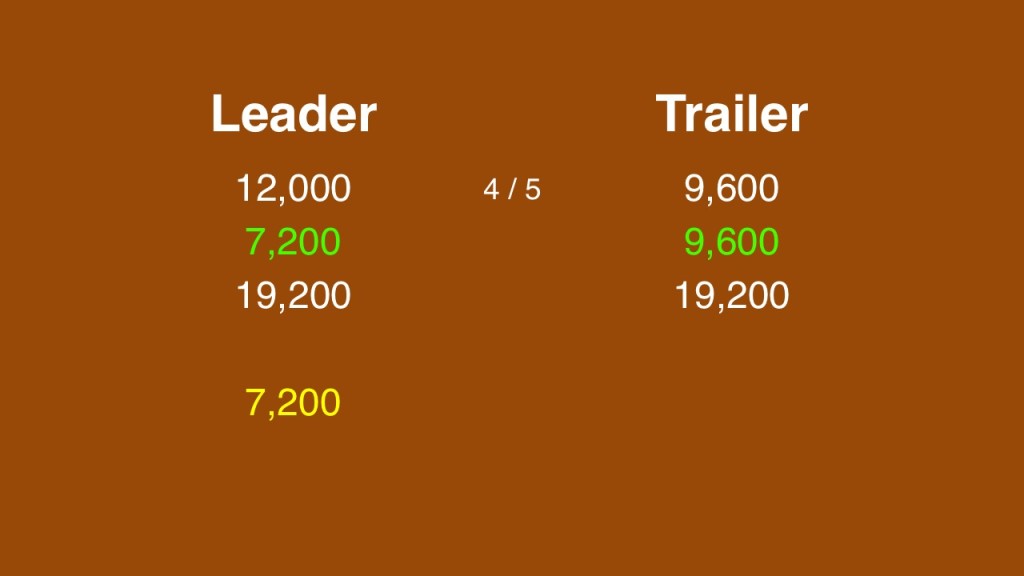
If he gets it wrong with that wager, he’ll be left with 4,800, which means the trailer can wager up to 4,800.
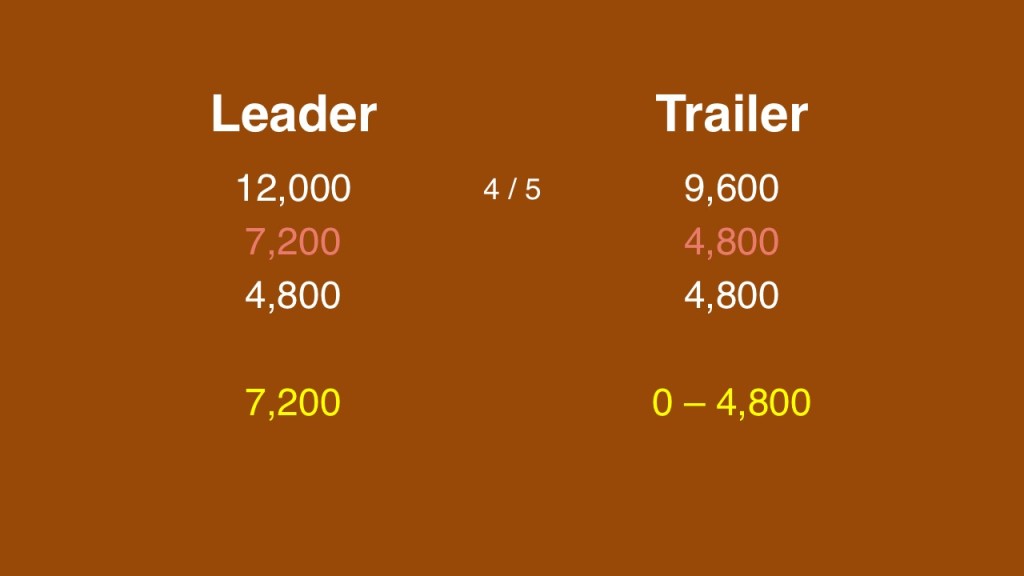
The difference between their two scores is 2,400, which means the trailer can safely cover that.
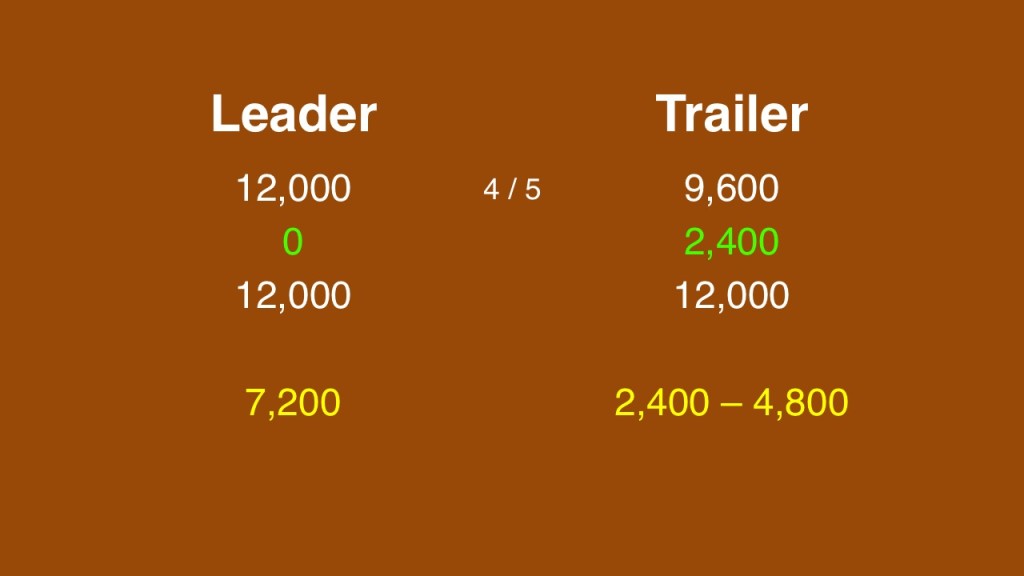
If the leader decides to wager 2,400 so as not to fall below the trailer, the trailer could wager 4,800.
Break point: five sixths
Finally, at or above the 5/6 break point, the trailer can “neutralize” the advantage of mind games the leader has. This might take a little explanation.
The trailer doubles up he’ll have 20,000, which means the leader will need to wager 8,000.
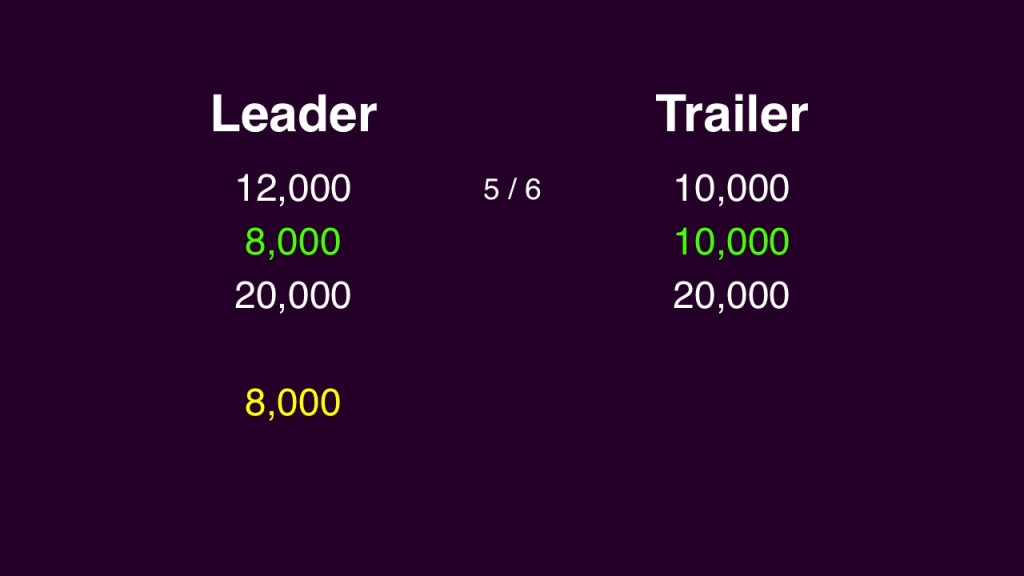
If the leader’s wrong with that wager, he’ll be left with 4,000, meaning the trailer can wager up to 6,000.
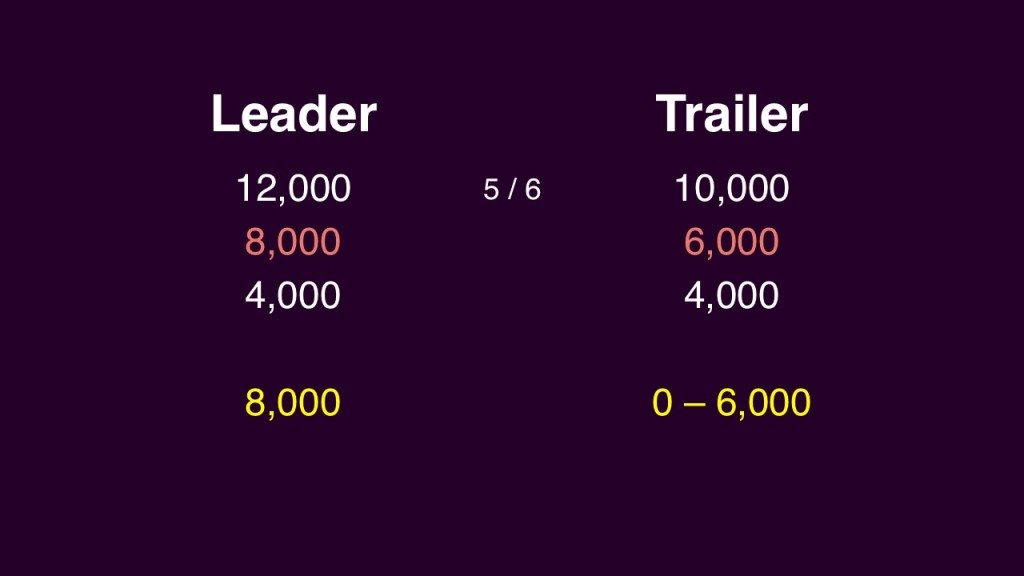
The difference between these two scores is 2,000, so if the leader wagers zero, the trailer can catch him with a wager of 2,000.
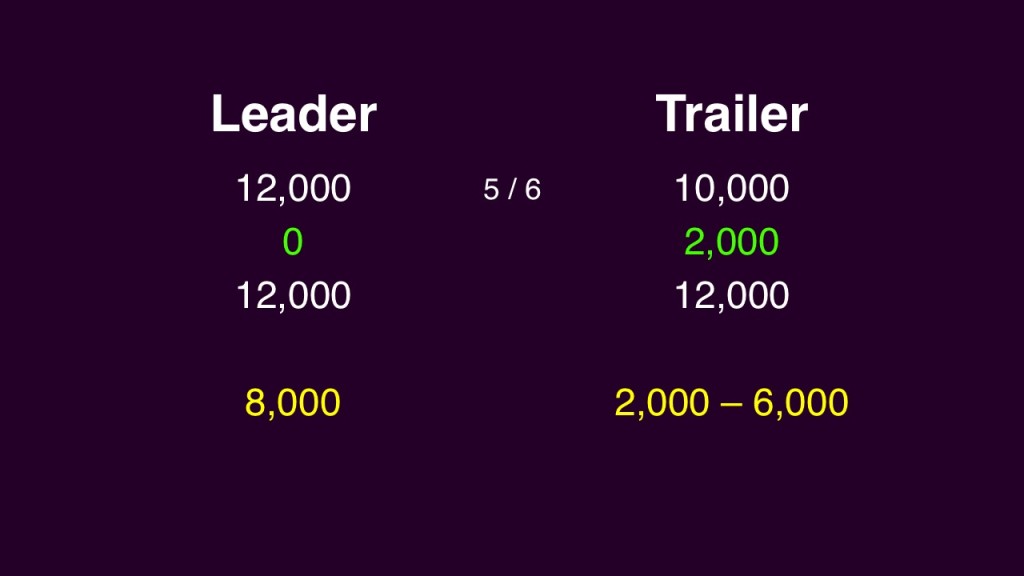
And if the leader wagers 2,000, the trailer can catch him with a wager of 4,000.
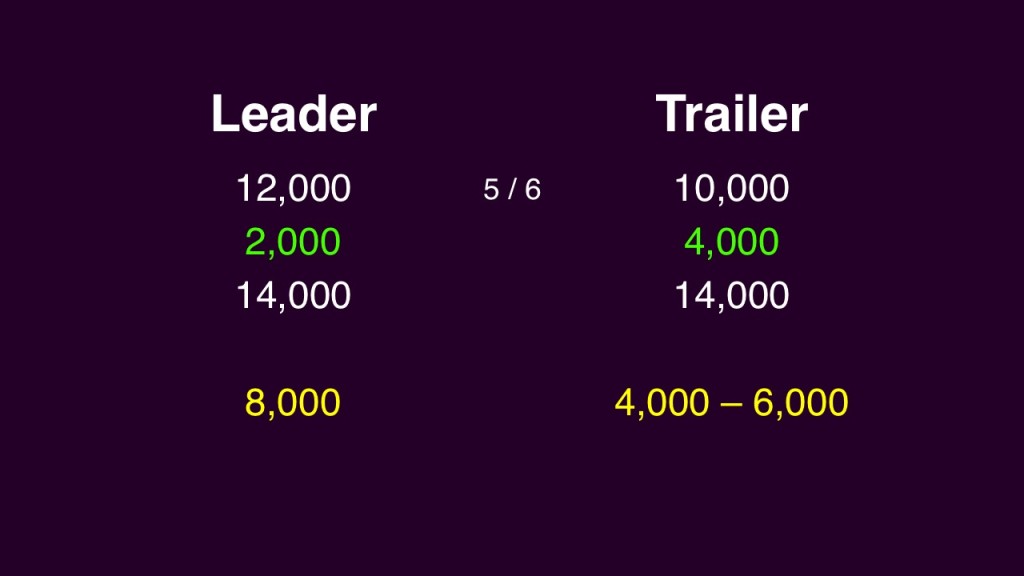
Now here’s where the mind games come into play.
If the leader assumes the trailer is going to make this safe 6,000 wager, he might wager 4,000 to stay above him.
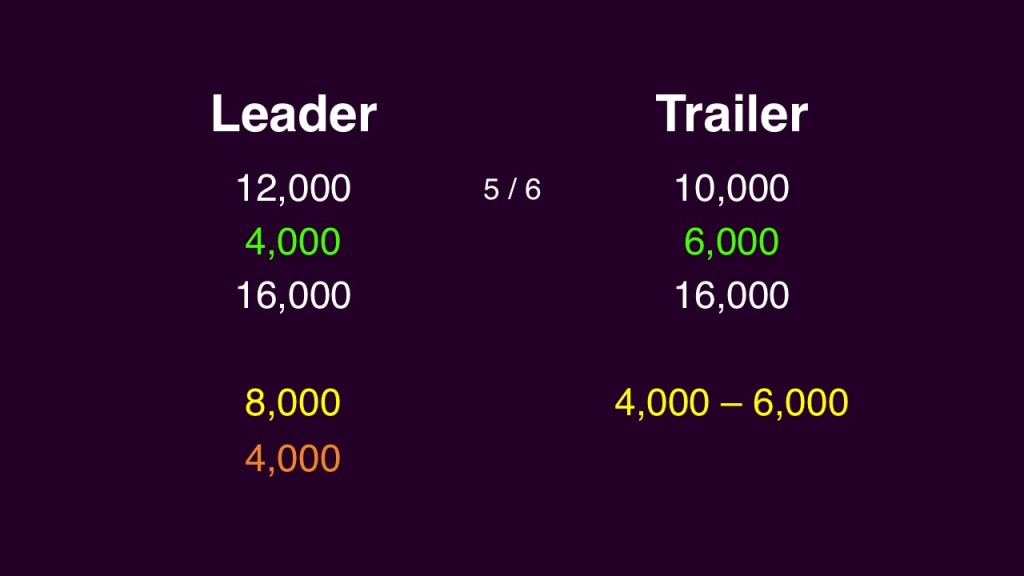
But if the leader gets it wrong with that wager, he’ll be left with 8,000, which would be the trailer’s total should he wager 2,000 and get it wrong.
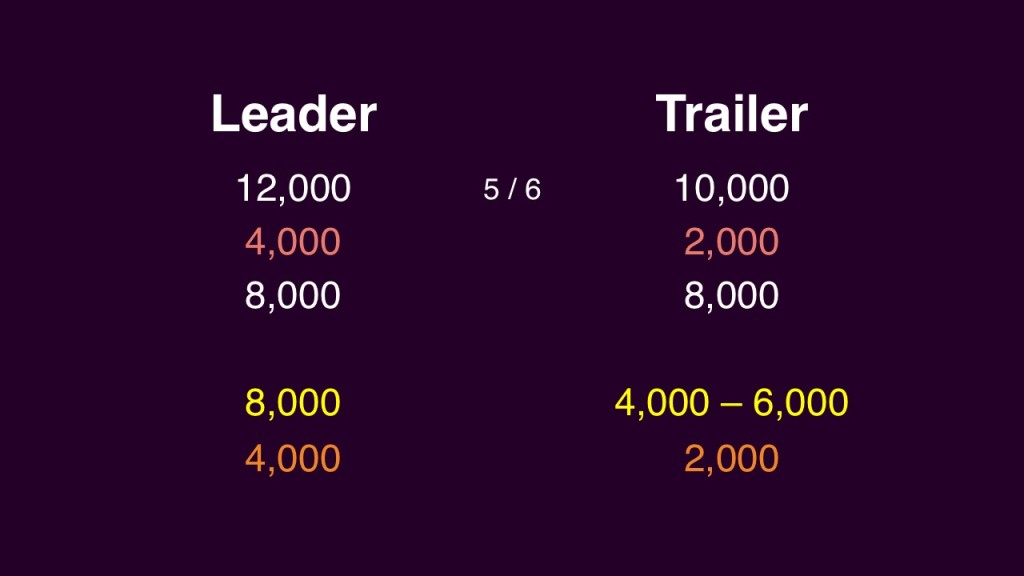
In response, the leader could just wager zero. But of course, that risks a loss — even to the rational 4,000 to 6,000 wager range.
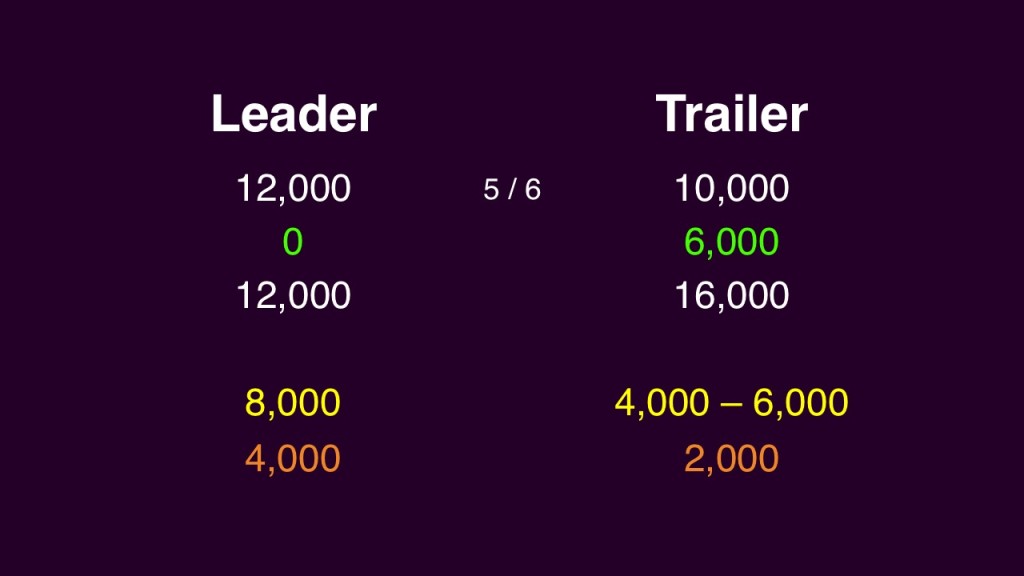
Example of the “neutralized” advantage
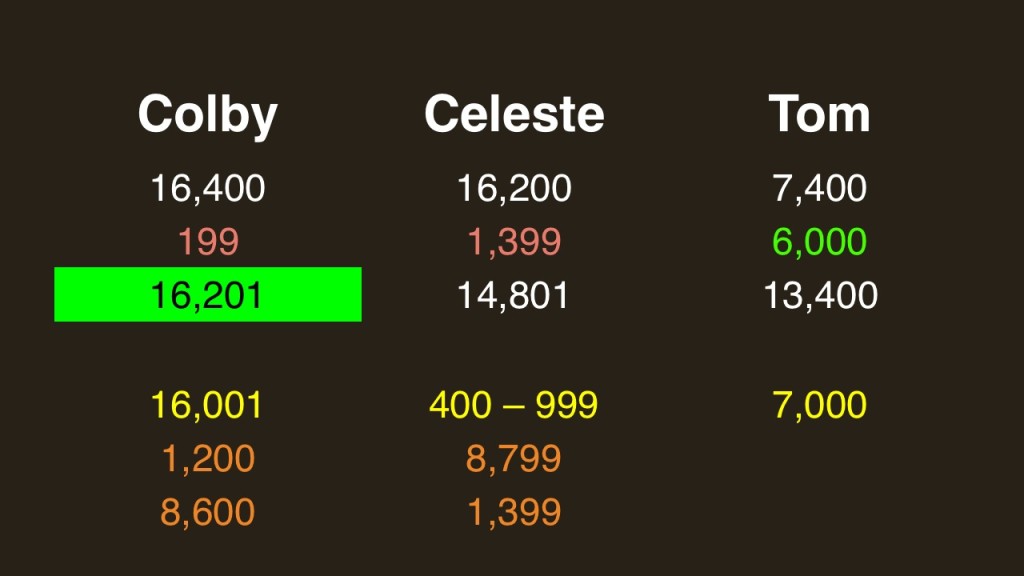
Remember what happened between Colby Burnett and Celeste DiNucci?
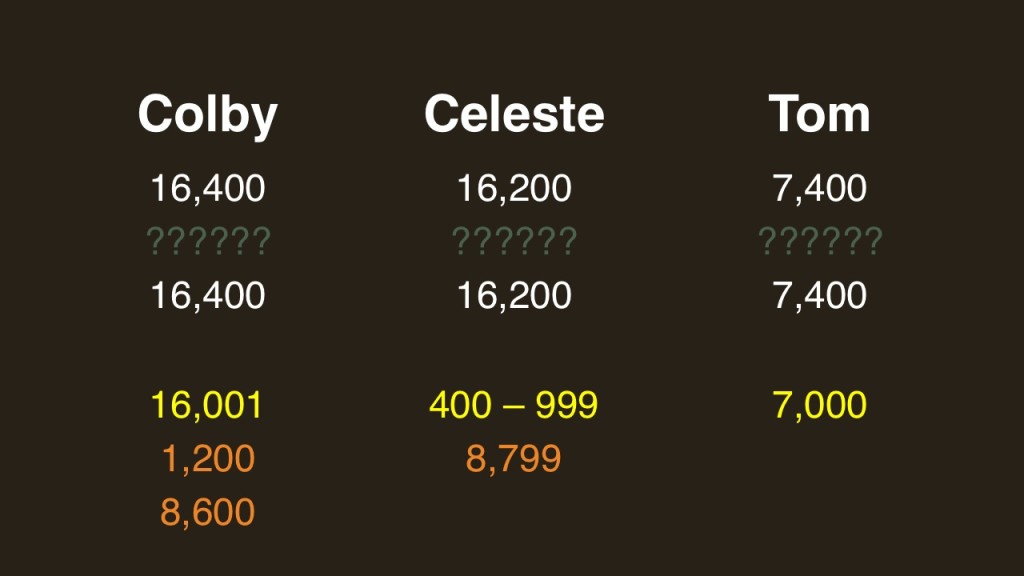
Trailing Colby by 200, Celeste wagered 1,399, the most she could without risking a loss to Tom Nissley. Colby wagered 199, putting the game squarely on Celeste’s shoulders.
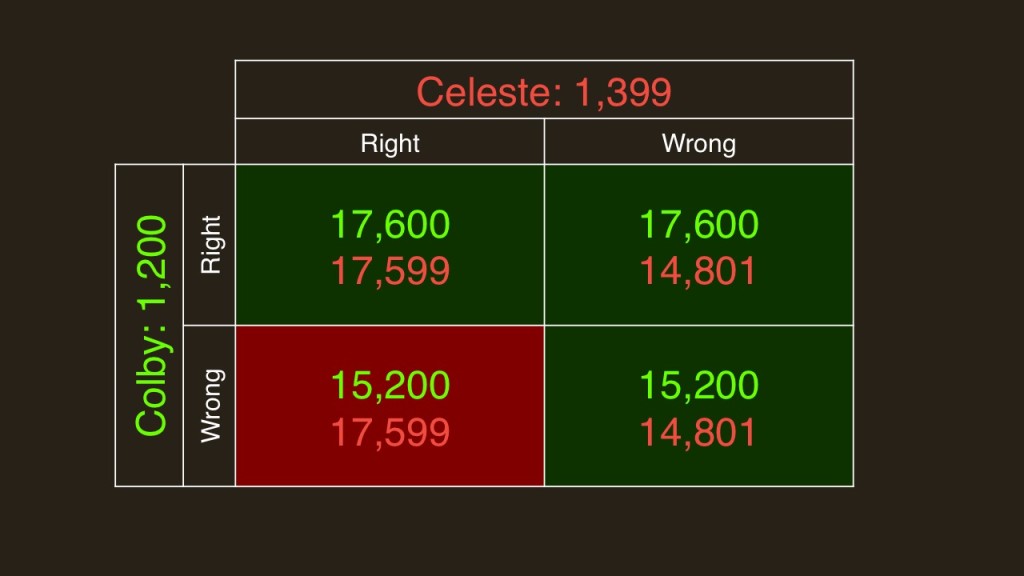
Colby could have wagered 1,200 had he anticipated Celeste’s wager, in which case Celeste could only win if she got it right and Colby got it wrong.
But Celeste might have also wagered, say, 400 — in which case, Colby would have lost had they both missed.
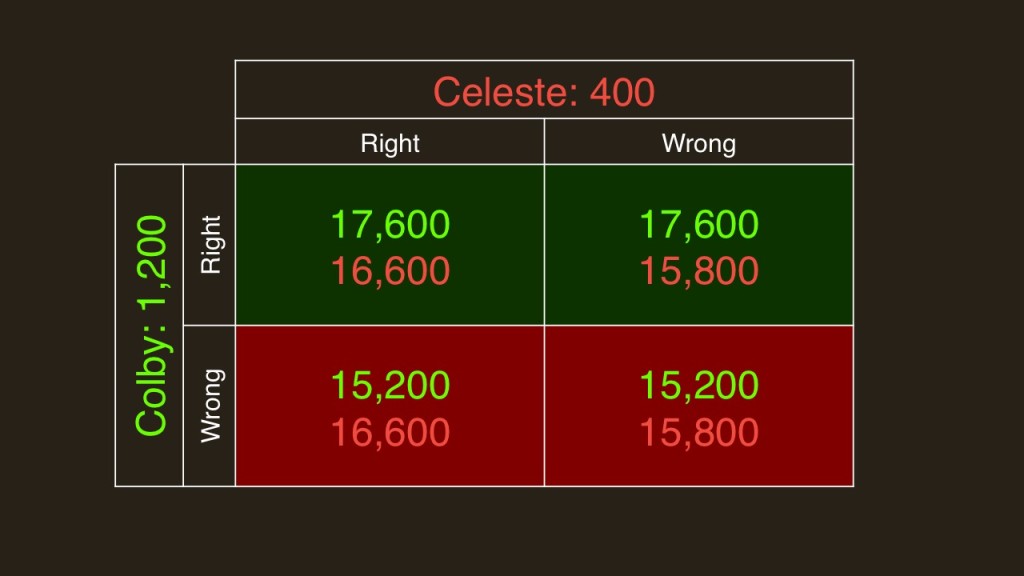
Above the 5/6 break point, the leader has to properly predict where the trailer will end up — sometimes, a tough proposition.
And that’s just one reason why break points are so fascinating — and important.
I thought I’d mention a point when applying this to a 2nd vs. 3rd place competition (when the leader has a lock): At any given “break point” in those cases it’s really still the next-lower situation because the player going in with the higher score wins a tie. (For example, with 3,000 and 6,000 it’s still a lock because the player with 6,000 can bet zero to still guarantee a win; with 4,000 and 6,000 a cover bet of 2,000 will win over both a zero and everything bet, meaning that it’s still really a crush for the trailer and that player should bet as such.)