
August 24, 394: last Egyptian hieroglyph created
On this day in 394, the last known Egyptian hieroglyph was created: the Graffito of Esmet-Akhom. It was carved in Philae, just south of the Roman border at Aswan.
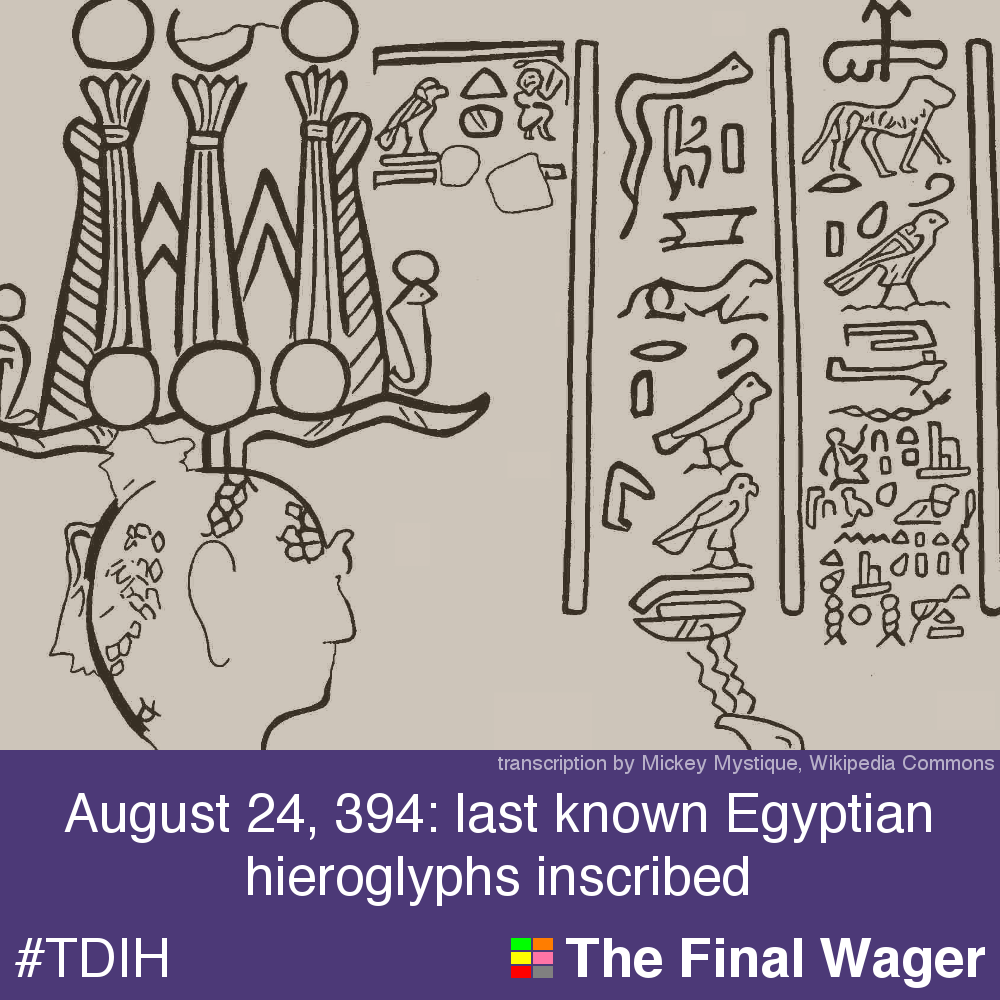
Hieroglyph comes from the Greek words hiero (sacred) and glyhpe (to carve or engrave). Part alphabet, part rebus, the writing system had around 5,000 symbols, with early forms dating back to at least the 33rd century B.C.
In 391 A.D., Roman Emperor Theodosius I ordered all non-Christian temples to be closed. Some in Philae, which had become part of the Kingdom of Meroe, continued to worship Egyptian deities for at least a few years after. This particular inscription glorifies the chief goddess, Isis.
Image: transcription of the hieroglyph by Wikimedia Commons user Mickey Mystique
Leave a Comment