
August 5, 1735: Zenger acquitted of libel
On this day in 1735, newspaper publisher John Peter Zenger was acquitted of seditious libel – a charge that had been levied despite the veracity of what he had printed.
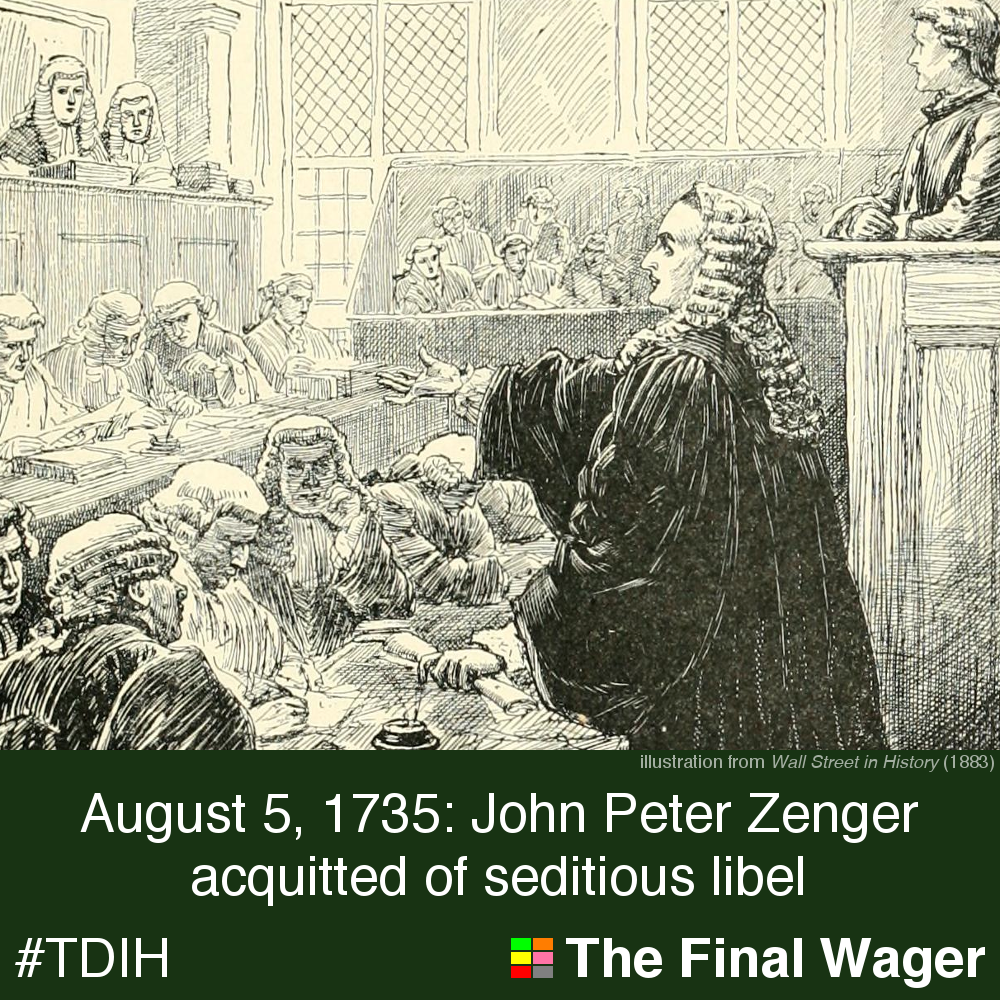
Zenger ran the presses for The New-York Weekly Journal, a newspaper that had started in 1733 in opposition to Governor William Cosby. The paper had been founded by a judge who had been removed by the governor after a dissenting vote.
Cosby looked for a way to shut down his foes, so he targeted Zenger, thinking (wrongly) that the newspaper would be unable to continue if one of the few printers in the colony were in jail. After two grand juries failed to press charges, Cosby filed an information in late 1734, bypassing the process and taking the case straight to trial.
The jury was only responsible for determining whether the defendant had actually printed the text; if so, the judges on the case – Cosby allies – would determine whether the text was libelous. However, thanks to a rousing speech by famed Philadelphia attorney Andrew Hamilton, the jury returned a verdict of “not guilty.”
The roots of what would become the First Amendment’s freedom of speech had been firmly planted in the minds of the American people.
Fun fact: after the judges disbarred Zenger’s original lawyers, they appointed 25-year-old Cosby loyalist John Chambers as public defender, who bought Zenger enough time to secure Hamilton’s aid. Chambers had a distinguished career in law and was the uncle of John Jay, the first Chief Justice and his namesake.
Image: illustration of the trial from Wall Street in History, an 1883 book.