
May 29, 1913: riots over a Rite
On this day in 1913, the premiere of Igor Stravinsky’s Le Sacré du Printemps, commonly translated to The Rite of Spring, led to riots among the Parisian audience.
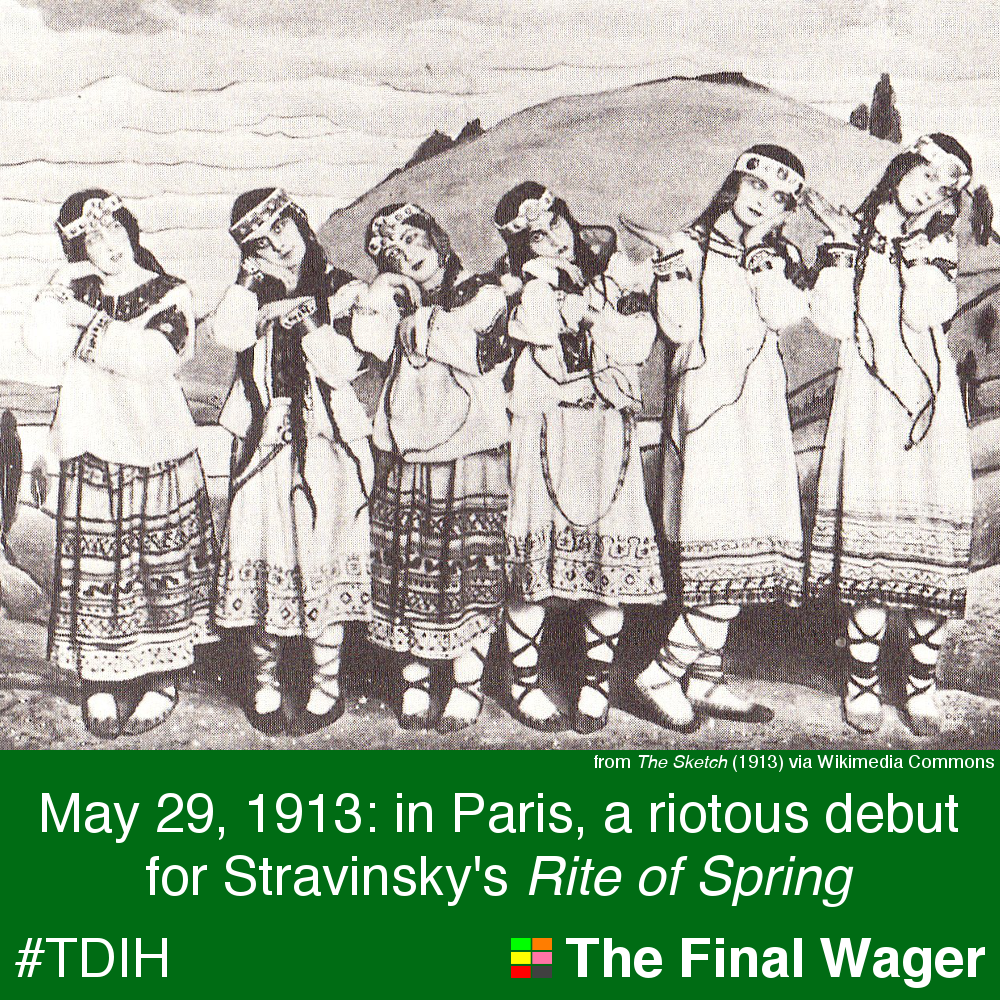
Featuring choreography from Vaslav Nijinsky, The Rite of Spring was Stravinsky’s third composition, all for the Ballets Russes; his 1910 debut, Firebird, had been particularly well received.
Mostly plot-less, the 35-minute piece connects various Russian and pagan folktales. The “rite” in question is a young woman who dances until her death to appease the god of Spring.
The Parisian audience at the premiere was split; the fashionable set detested the experimental nature of the music and dancing, while the bohemians adored it. Much of the performance was inaudible due to the noise being made between the factions. Fights broke out, and 40 people were removed while the performance continued.
The stage manager had a great idea to prevent future interruptions: whenever the hissing began, he would turn on the house lights. According to The New York Times, “Well known people who are hostile to the ballet do not desire to appear in an undignified rôle.”
The piece went on to become one of the most influential of the 20th century, and it was the composer who appeared most prescient. Said Stravinsky after the premiere: “No doubt it will be understood one day that I sprang a surprise on Paris, and Paris was disconcerted. But it will soon forget its bad temper.”
For more on the Rite riots, visit NPR’s Performance Today.
Image: originally published in British magazine The Sketch in 1913, reproduced in First Nights: Five Musical Premieres by Thomas F. Kelly (2000), via Wikimedia Commons.
