
May 13, 1780: Tennessee settlers sign compact
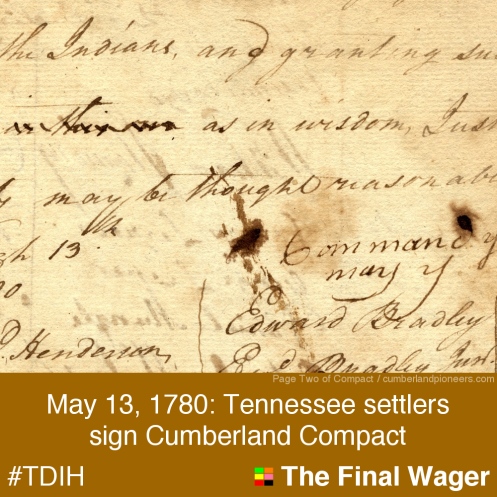
On this day in 1780, a group of settlers in the “unorganized” territory south of the Ohio River signed the Cumberland Compact, laying out many ideas that would be included in the Tennessee Constitution.
In 1779, James Robertson, a leader of the Overmountain Men, set up a fort along the Cherokee River in the wilds west of North Carolina. The river would later be renamed the Tennessee, after a nearby Cherokee village named Tanasi, and the protective structure would be named Fort Nashborough.
Other men and even a few families soon followed, and the next year, Robertson drafted an agreement, which around 250 men signed. The Cumberland Compact spelled out the terms of the town: it compelled militia duty for all men over the age of 16, paid certain amount of animal pelts to various officials, and stated that capital crimes would be tried in the state of North Carolina.
A lawyer named Andrew Jackson made his debut in the town in 1788; in 1796, Tennessee became the 16th state, taking Nashborough – now Nashville – as its capital.
For more on the Cumberland Compact, check out Cumberland Pioneer Settlers, a website devoted to the early history of Tennessee.